





What website maintenance services actually cover
The word maintenance covers six genuinely different jobs, and most plans sold in this market quietly do two of them.
The six are hosting the site somewhere that does not fall over, backing it up in a way that has been proven to restore, keeping WordPress core and the plugins and the theme current without breaking anything, watching uptime and the SSL certificate, hardening the thing against the attacks that actually happen, and being reachable when you need a change made.
Anything else is a bonus. Anything less is a hosting bill with a better name on it.
The reason this matters is that the failures are not evenly distributed. A site almost never dies because of the thing the owner worries about; it dies because a plugin auto-updated at two in the morning, took the checkout page with it, and nobody looked at the site until a customer called on Thursday.
Hosting, and the cheapest thing to get wrong
Hosting is the floor everything else stands on and it is where businesses save forty dollars a month and lose a week.
Cheap shared hosting puts your site on a machine with several hundred other sites, and you inherit their traffic spikes, their security posture and their support queue.
The symptom is a site that feels fine at ten in the morning and takes six seconds to load at seven in the evening, which is exactly when your customers are looking.
We host on our own DigitalOcean infrastructure with server-level caching, and the practical difference is that a page that took four seconds on the old host usually takes under one on ours without changing a line of code.
You are not locked in. Clients own their code, their content and their data outright, and if you leave we hand you the whole site and help you move it.
That is not generosity. It is what owning your website is supposed to mean.
Backups that somebody has actually restored
A backup you have never restored is a theory.
Ours run daily off-site with a retention window, which is standard, and the part that is not standard is that we restore one to a staging environment on a schedule and confirm the site comes back whole.
Database and files together, because a database without the uploads folder gives you a site full of broken images and a very bad afternoon.
We keep enough history to go back past the moment a problem started, which matters more than people expect, because the restore request we get most often is not “the server died” – it is “something changed nine days ago and we only just noticed.”
Restores are included. You will not get an emergency invoice arriving in the middle of the worst day of your quarter.
WordPress maintenance, and why automatic updates are not a plan
WordPress core, the theme and every plugin ship updates constantly, and the two failure modes are opposite and equally common.
Never updating is how sites get hacked, because almost every compromised WordPress site we have been handed was running a plugin whose hole had been public, and fixed, for months. Updating blindly is how sites break, because a plugin author refactored something on a Tuesday and your booking form no longer submits.
Neither one is a strategy, and “enable auto-updates and hope” is the second one with the reporting turned off.
Our version is unexciting on purpose. Updates get applied on staging first, the site gets checked where it actually matters – the forms, the checkout, the booking widget, the pages that make money – and then the same updates go to production with a fresh backup taken first.
Security releases move fast, feature releases wait for the window. When a plugin becomes a liability we tell you and we replace it, which is a conversation about the site rather than a line on a report.
The other half of WordPress maintenance is subtraction. Most sites we take over are running plugins nobody has used since 2021, and every one of them is code executing on every page load and a door somebody has to remember to lock.
Uptime, SSL and the things that break quietly
The dangerous failures are the silent ones.
Uptime monitoring checks the site every few minutes from outside your own network and tells us before it tells you, which is the entire point; a site that goes down at eleven at night and comes back at six has cost you nothing if somebody fixed it, and has cost you a night of missed calls if nobody was watching.
We monitor the SSL certificate expiry too, because an expired certificate throws a full-screen browser warning that says your site is not safe, and that is a thirty-second fix that has ruined plenty of weeks.
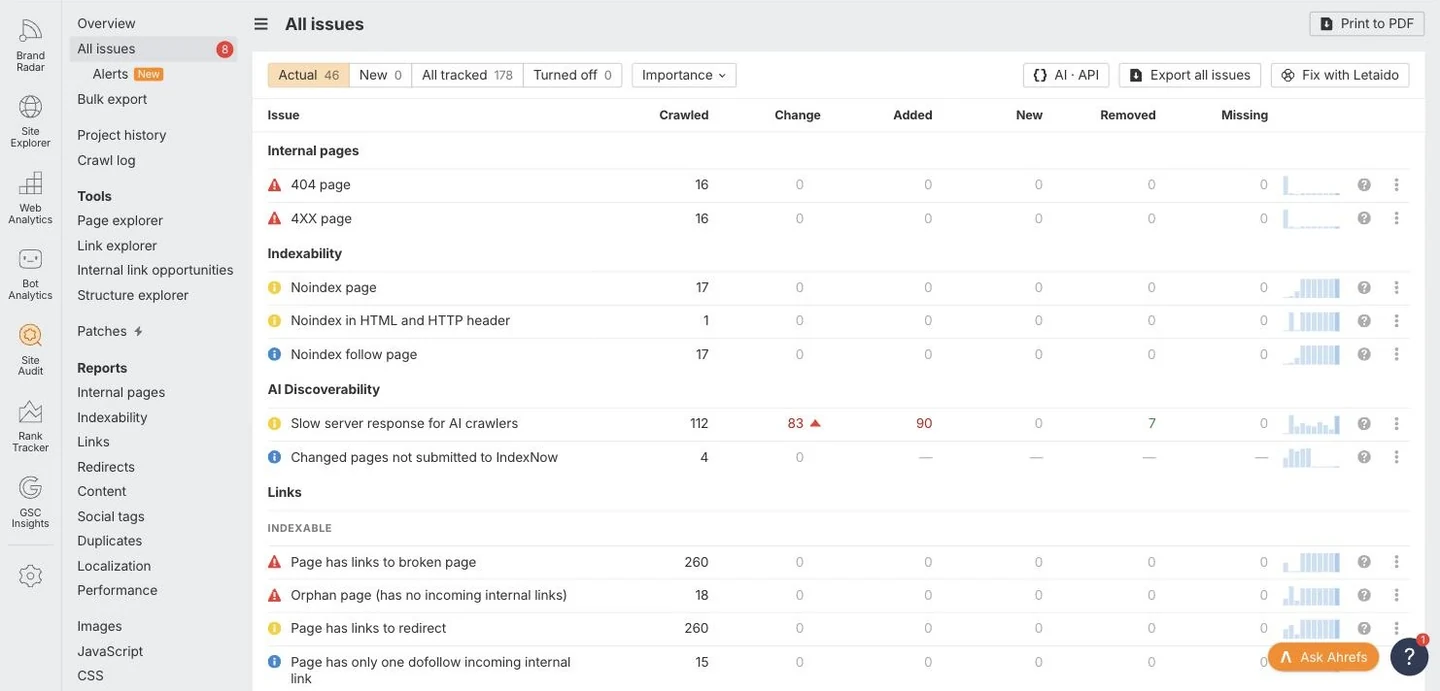
We also watch the things that fail without an error page. Contact forms that stopped delivering because the mail provider changed a rule.
Search Console coverage errors piling up after a plugin started generating hundreds of URLs that nobody asked for. A payment gateway that quietly stopped taking one card type.
None of those failures show up as downtime on any dashboard, and every one of them costs real money.
Website management includes a person who answers
The feature nobody puts on the comparison table and everybody actually wants is a human being who picks up the phone.
Most maintenance relationships fail on this and not on the technical work. The site is fine, the updates are current, and the owner needs the holiday hours changed on Thursday and sends an email into a support portal that answers in three business days.
Our clients text a number. The change gets made that day, usually within the hour, and if it is a five-minute job nobody is invoiced for five minutes.
That is what website management should mean. Not a dashboard you log into.
Somebody who knows your site.
The monthly hour, and what content changes are included
Every plan includes a block of change time, and the block is the reason plans are worth having.
Small edits are what real businesses need constantly: new staff photo, updated pricing, a service added, a seasonal banner, a page taken down. Those come out of the included time and do not get itemised.
Larger work – a new page template, a new section of the site, an ecommerce integration – is quoted as a project, because pretending a twenty-hour build fits inside a maintenance plan is how agencies end up resenting their clients.
If you are pushing regular content and want it to do something in search, that is a different conversation and it belongs with website content strategy rather than inside a maintenance plan.
Performance does not hold by itself
A site launches fast and then it drifts, and nobody notices because the drift is gradual.
Images get uploaded straight off a phone at four thousand pixels wide. A tracking script gets added for a campaign that ended back in March, and it never gets removed afterward.
The database fills with revisions and expired transients. Six months later the site that scored well at launch is slower than it was, by a second and a half on some of the ones we have taken over, and the owner is told the site “just got old.”
Sites do not get old. Things get added to them.
We check Core Web Vitals monthly on a real phone connection and fix the drift as part of the plan, which is much cheaper than the alternative. When the drift is not the problem and the build underneath is, we say so, and that is when the conversation turns into a website redesign instead.
What website maintenance costs
The low end is a straightforward brochure site of ten or fifteen pages: hosting, daily tested backups, monthly updates on staging, uptime and SSL monitoring, security, and a modest block of change time. The middle of the range is a larger site with forms, third-party integrations and content going up regularly.
The high end is ecommerce or a site with a lot of moving parts, where updates are riskier, downtime costs money by the hour, and the checking after every update is a real job rather than a glance.
There is no setup fee for sites we built. For sites we did not build there is usually a first-month clean-up, quoted after we look, because taking over somebody else’s site means finding out what is in it.
Month to month, cancel whenever, and you take the site with you.
What is not included
Maintenance is not marketing, and this is where plans get sold dishonestly.
It does not include SEO, ad management, content writing beyond small edits, or a redesign in monthly installments. It does not include unlimited development.
It does not include fixing a site that is fundamentally broken for free under the guise of support, though we will always tell you plainly which category you are in before you pay for anything.
We would rather turn down the monthly fee than take it for a year of work that cannot succeed. The wider picture of how we build sites in the first place, and why they need less rescuing later, sits on web design.
How it works month to month
Onboarding takes about a week: we move the site to our hosting, take the first full backup and restore it once to prove it works, inventory the plugins, patch what is out of date on staging, and fix anything obviously broken.
After that it settles into a rhythm you barely notice. Updates and checks happen in a set window each month, monitoring runs continuously, and you get a short plain-English note about what was done and anything that needs a decision.
No forty-page automated PDF full of green ticks. Those are for justifying the invoice, not for you.
Common questions
What do website maintenance services actually include?
Hosting, off-site backups that get restore-tested, WordPress core and plugin updates applied on staging first, uptime and SSL monitoring, security hardening and cleanup, monthly performance checks, and a block of time for small content changes. Anything larger is quoted as a project.
Can I just use automatic updates and skip this?
You can, and for a small brochure site running three plugins it may well be fine for years. The risk is that automatic updates break things at random hours with nobody watching, and that a broken checkout costs more in one weekend than a year of maintenance.
Do I need maintenance if my site is not WordPress?
Every site needs hosting, backups, certificate renewal and somebody to make changes. The update work is specific to WordPress; the rest applies to anything.
Will you maintain a site you did not build?
Usually, after we look at it. If the site is built on something we cannot support safely we will tell you that instead of taking the money.
What happens if my site gets hacked?
We restore from a known clean backup, find how they got in, patch it, and clean the search results if the site got flagged. Cleanup for sites already on a plan is included, and cleanup for a site we have never seen is quoted after we look.
Am I locked into a contract?
No. It is month to month, and if you leave you take your code, content and data with you, and we will help move it.
Do you host the site or do I keep my own hosting?
We prefer to host it, because it removes an entire category of finger-pointing when something goes wrong. Keeping your own hosting is possible and it costs a little more, since we are then working around somebody else’s stack.