



What you actually own when the website is somebody else's
Ask a dentist what the website is for and the answer usually arrives as some version of “we wanted something that looks professional.”
The job it actually has is moving a person who is in some amount of pain, or some amount of embarrassment about their teeth, from a search result into an appointment slot without requiring them to call during business hours. Every decision in dental website design either serves that or quietly gets in its way.
A stock photo of a family in a lobby that is not your lobby does not serve it, and neither does a homepage slider with four panels that nobody ever scrolls past the first of. A phone number rendered as an image, which we still find in 2026, actively works against it.
We build the site around the booking, and then we make the booking easy to reach from every page a patient could possibly land on. That is the spine of the whole thing, and most of what follows is just the consequences of taking it seriously.
The large dental marketing vendors do not sell you a website. They sell you a subscription to one, and the difference stays invisible until the day you try to leave with it.
The cleanest way to find out where you stand is to ask your current vendor for a full export and then look at what arrives. Usually it is the text, in a zip file, and a set of images at whatever resolution their uploader compressed them to four years ago.
What does not arrive is the theme, the templates, the block code, the form handlers, the redirect map, the analytics property or the URL structure your rankings are attached to; those are the site, and the zip file is the contents of the site.
Rebuilding them is not a weekend, and the practice paying for that rebuild is the practice that already paid for the site once.
The URL structure is the part that costs the most and gets noticed the least.
A rented platform decides where your implants page lives, and the day you move off it every one of those addresses changes at once – so without a redirect map that somebody built deliberately, the pages that were working stop working in the same week the new site launches.
We have taken over sites where the previous vendor would not supply the redirect map, which meant crawling the old site to reconstruct it before we were allowed to touch anything. That is a week of billable archaeology.
None of that would matter much if the rented template were good, and it usually is not, because a template that has to serve two thousand practices carries every feature any of them ever asked for and your patient downloads all of it.
We have opened dental vendor sites that ship well over three megabytes of JavaScript to a phone before a single word of text appears – for a page whose entire purpose is a phone number and a button.
Our position is boring and we will not be moved off it. You own the code, the content, the domain, the analytics and the hosting account, and if you fire us on a Tuesday the site keeps working on Wednesday.
The general version of that argument lives on web design, and the contract side of it, meaning what to ask a marketing vendor before you sign, sits on dental SEO.
Fast on a phone, because that is where the patient is
Somebody with a cracked molar is not opening a laptop.
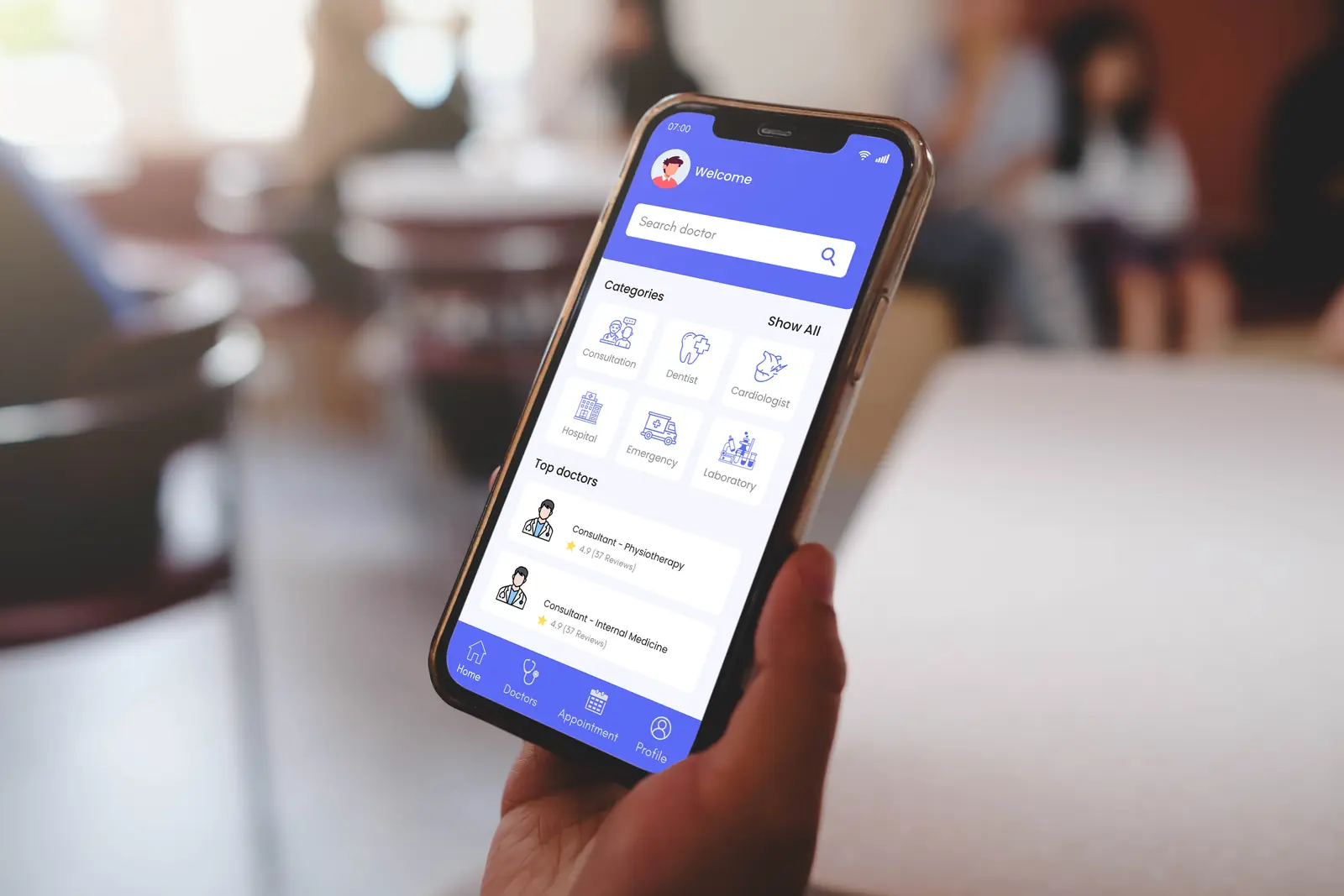
They are on a phone, often on a bad connection, often at ten at night, and they are going to make a decision in well under a minute. Speed is not a technical vanity metric in that scenario; it is the difference between a booked chair and a back button.
Google measures it too, through Core Web Vitals, so the same work that keeps the patient also helps the ranking. That overlap is rare and worth exploiting.
What actually makes a dental site slow is predictable. Uncompressed hero images shot at print resolution.
Three tracking scripts nobody remembers installing. A booking widget that loads its entire framework on every page rather than the one page it is needed on.
A font stack pulling six weights when the design uses two. Web chat bubbles are the worst single offender we see, and they are almost always installed by someone who never measured what they cost.
We build hand-coded WordPress on a custom block theme, with no page builder and no Elementor anywhere in it, and the reason is weight on the wire rather than taste. Page builders generate markup for the builder’s convenience, not the browser’s.
We would rather write the markup.
The one place dental web design usually goes wrong
Here is the structural mistake we find most often on a dental site, and we find it almost everywhere.
The practice has a page called Services. On it, in a tidy grid, sit implants, Invisalign, veneers, root canals, extractions, whitening, crowns and pediatric care, each with two sentences and a photo.
That page competes for nothing. It is not the best page on the internet about dental implants, because it is a paragraph about dental implants sitting next to seven other paragraphs, and Google has no reason to prefer it over a page that is entirely about implants written by somebody who does them.
The fix is one page per procedure, and what has to be on that page, along with the keyword work that decides which procedures get one and in what order, is covered in full on dental SEO. We are not going to write it twice.
The build question is the other one, and it is the one nobody asks until the pages are already written.
Eight procedure pages are a different site, structurally, from the one most practices are sitting on.
The navigation was designed around a single Services link and it does not survive the change; the internal linking has to send a patient from implants to the consultation and back rather than dead-ending – the template has to let a page about extractions be a different shape from a page about Invisalign, because the questions are not the same length.
Practices that bolt eight pages onto an old build end up with eight pages nobody can reach from the homepage, which is an expensive way to own good content.
So we design for the page count you are going to have rather than the one you have today, and the services page becomes an index that points at real pages instead of a graveyard of two-sentence paragraphs.
That is a build decision and it is made early, because retrofitting it means rebuilding the navigation of a site somebody just paid for. Early is cheap.
Booking that does not fight the practice management system
This is where dental websites break, and it breaks in a specific and repetitive way.
The practice runs Dentrix, or Eaglesoft, or Open Dental, or Curve, and the website has a Request Appointment form. The form emails the front desk, someone reads it between patients, calls the person back, and books them manually into the real schedule.
That is not online booking. That is a contact form wearing a costume, and the patient who filled it out at ten at night has already called somebody else by the time the phone rings at nine the next morning.
Real online booking writes into live availability. Products like NexHealth and LocalMed exist to bridge that gap, and which one fits depends entirely on what you already run, so this is a conversation before it is a build decision.
Sometimes the bridge costs more per month than the practice will get back, and a fast, obvious, tap-to-call phone number plus a form that goes somewhere a human actually watches is the better system. We will say that when it is true.
What we will not do is put a booking button on a site and let it dead-end. Every path a patient can take needs to end somewhere real: a booked slot, a ringing phone, or a form with a response time you have actually committed to.
Accessibility, and why a dental office is a bad place to skip it
Roughly a quarter of American adults have a disability of some kind, and every one of them needs a dentist.
The legal exposure is real and we are not lawyers, so treat this as an observation rather than advice. The practical work is well-defined regardless.
Real contrast on real text, not gray on gray because it looked elegant in the mockup, and form fields with labels attached to them rather than placeholder text that vanishes the moment you start typing.
A page that can be operated entirely from a keyboard, and alt text that describes the image instead of listing keywords. Video captions.
Heading levels in order, which also happens to be how search engines read the structure of a page.
Accessibility overlay widgets – the ones that add a little accessibility icon in the corner for a monthly fee – are a bad answer and a well-documented one. They sit on top of a broken page and announce that it is fixed – build it correctly underneath and you will not need the badge at all.
Website design for dentists who already have a site
Most practices calling us are not starting from nothing. They have a site, it is four to seven years old, and something about it has stopped working.
The first question is whether it needs a rebuild or a repair, and the answer is not automatically the expensive one – a site with sound structure, decent content and a slow front end can sometimes be fixed in a fraction of a rebuild’s cost and time.
A site on a rented vendor platform cannot be fixed at all, because you are not allowed to touch the parts that are wrong, and a site with one services page and nine procedures on it needs new content far more than it needs new design.
We look before we quote. If you should spend three thousand dollars fixing what you have rather than fifteen thousand replacing it, that is what we will tell you, and we have lost work by saying so.
What dental website design costs
The range is mostly page count and mostly content, and a five-page site for a single-doctor general practice sits near the bottom. A practice with three doctors, two locations, ten procedure pages, real photography and a live booking integration sits near the top.
The design work does not vary as much as people expect between those two; the writing and the structure do, and the writing is where the ranking comes from.
What we do not do is a setup fee attached to a mandatory monthly that never ends. You buy the site.
It is yours.
How long it takes
Four to six weeks from kickoff to launch for a typical practice.
The variable is almost never us. It is content: photos of the actual office, headshots of the actual doctors, the insurance list, the new patient forms, and somebody at the practice with an hour a week to answer questions.
Builds that run long run long because a real dentist is booked solid with real patients, which is a good problem and a predictable one. We front-load the asking so it lands before it blocks anything.
Booking integrations add one to two weeks and occasionally more, because they involve a third party whose timeline is not ours.
Common questions
How long does it take to build a dental website?
Four to six weeks for most practices, measured from kickoff rather than from the first email. Booking integrations can add a week or two, and the schedule usually depends on how quickly the practice can get us photos and content.
Do I own the website when it is finished?
Yes, completely: the code, the content, the domain, the hosting account and the analytics, and if you stop working with us the site keeps running. That is not how the large dental marketing vendors do it, which is the whole reason we say it out loud.
Can patients book appointments directly from the site?
They can, if your practice management system supports a booking bridge and the monthly cost makes sense for your volume – Dentrix, Eaglesoft, Open Dental and Curve all have options. When it does not pencil out, we build a very fast phone-and-form path instead and tell you why.
Will a new website improve my Google rankings?
It removes the things holding you back, which is not the same as ranking on its own. Speed, structure, procedure pages and schema are the floor; the search work that actually moves you sits on dental SEO.
A fast site with no content ranks for nothing.
Do you work with practices outside Walla Walla?
Yes. We are in Walla Walla and we work across the valley and the Tri-Cities, and we build for practices well outside both.
Dentistry is local; web work is not.
What about a website design for dentists who need HIPAA compliance?
Any form that collects health information needs to be handled properly, which usually means the form does not email itself around in plain text, and we build the intake path so that protected information goes where it should. We are not a compliance auditor and we will tell you when you need one.