






What Google Maps SEO is actually optimizing
On a Tuesday afternoon on Main Street in Walla Walla, somebody unlocks a phone, types plumber, and calls the second business on the screen without scrolling once.
Three businesses got shown. A fourth, two blocks closer, was never in the running, and the ranking that made that call runs on a different index from the one that ranks web pages, with different rules, so you can win one and lose the other on the same screen.
Google Maps SEO is the work of ranking inside that second index, and it behaves in ways that surprise people who learned SEO on web pages. There is no title tag. There is no word count. Nothing you write on your website directly decides which three businesses appear in the pack, and yet the website still matters, indirectly, through a mechanism most people never get explained to them.
This page is about the machinery: how the ranking is computed, what categories actually do, how proximity bends the map, how to measure a rank that changes every hundred yards, and what to do about the competitor who has stuffed three keywords into their business name. The wider case for local search work, and what a full local program costs, lives on local SEO for small business. We are not going to repeat it here.
Ask what is actually being ranked and the answer is an entity in Google’s local index, sitting a step away from both your website and your business. Your Google Business Profile is only the part of that entity you are allowed to edit – the rest is assembled without asking you.
Google assembles the rest from everywhere else: the addresses and phone numbers it finds across the web, what your website says about you, what review text says you do, what other businesses at your address look like, and how people behave after they see you in the results. That last part is the least discussed of the four – and it is real. When somebody taps your listing, then taps directions, then does not come back to the results a minute later to tap somebody else, Google learns something about whether you were the right answer.
So the profile is the steering wheel and the entity is the car. Most of this page is about steering.
The three inputs behind every local pack ranking
Google states its own factors plainly, which is unusual, and the statement is more useful than most of the industry treats it. A local pack ranking comes out of relevance, distance and prominence.
Relevance is whether your listing matches what was typed, and it is driven mainly by your categories, your services, and the words that appear in your reviews and on your site. Distance is how far you are from the searcher, or from the place named in the search. Prominence is how well known you are, assembled from reviews, links, mentions, article citations and your web presence generally.
Those three combine differently by query and industry, which is why a tactic that transformed a plumber does nothing for a dentist across the street. Distance you cannot move. You can move relevance quickly and cheaply; prominence you build. Prominence is the slow one, and it eventually decides who wins a search made from the middle of town, where distance stops separating anybody.
Categories are the race you enter, not a label you pick
There are a few thousand Google Business Profile categories and the list is closed. You cannot invent one, and we would argue that picking from it is the most consequential decision in Google Maps SEO.
The primary category does most of the work. It decides which searches you are eligible for at all, and it also decides which features your profile is given, because Google shows different fields to different categories: menus for restaurants, booking for salons, service areas and job types for contractors. Get the primary category wrong and you are not ranking poorly – you are entered in a different event.
The practical method is not to guess. Look at the three businesses currently sitting in the pack for the search you want, find what their primary category is, and compare it to yours – the winners of a given search are usually clustered on one or two categories, and if you are on a third, that is your answer. Tools will read the category out of the listing’s markup for you, and there are browser extensions that show it on the map directly.
Secondary categories are the part people overdo. They add eligibility, and each one also dilutes the relevance of the primary a little, so nine secondary categories is a way of telling Google you do everything and specialize in nothing. Add the ones you genuinely want calls for and leave the rest – a profile that claims eleven specialties is a profile that convinces Google of none of them.
Google Business Profile optimization is a feed, not a form
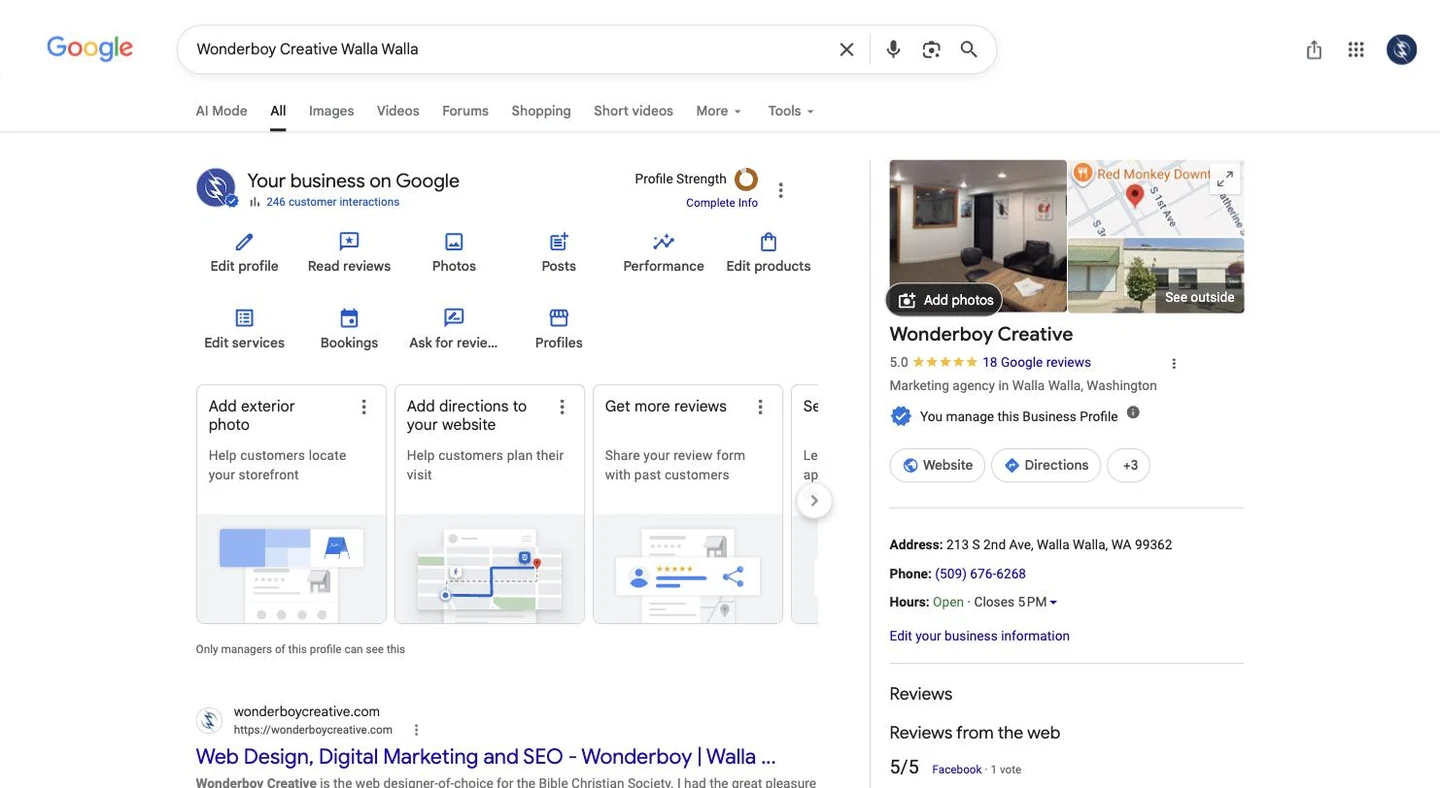
Most profiles are filled in once and then treated like a filing cabinet. The ones that win are treated like a channel, and the difference in effort is smaller than the difference in outcome.
The static fields still matter and they are a solved problem – services entered individually with descriptions, attributes ticked honestly, hours correct including the holiday hours nobody remembers, opening date, service areas, and a description written by a person. That is an afternoon of work.
The living parts are where the gap opens. Photos uploaded regularly, geotagged or not, showing the actual place and actual work. Posts, which do not directly lift ranking much but do occupy screen space and do get clicked. Questions and answers, which is a public forum on your listing that most owners have never opened, and which you are allowed to seed yourself by asking the questions customers actually ask and answering them. Products, where the category supports them. Messaging, which will quietly hurt you if it is switched on and nobody replies.
A profile touched every month beats an identical profile touched every year. Nobody can tell you exactly why in a way that survives scrutiny, and the pattern is consistent enough that we do it anyway.
Proximity, service radius, and why the pack tightens downtown
Distance is the factor you cannot buy, and its behavior is stranger than the flat statement suggests.
The radius Google is willing to search expands and contracts with density. In downtown Seattle, a pack for coffee draws from a few blocks, because there are forty options inside a few blocks. Out on Highway 12 the same query pulls from miles, because there is nothing closer. This is why a rural business can rank across a huge area while an urban business ranks across four streets, and why moving your shop two miles is a bigger SEO event than a year of content.
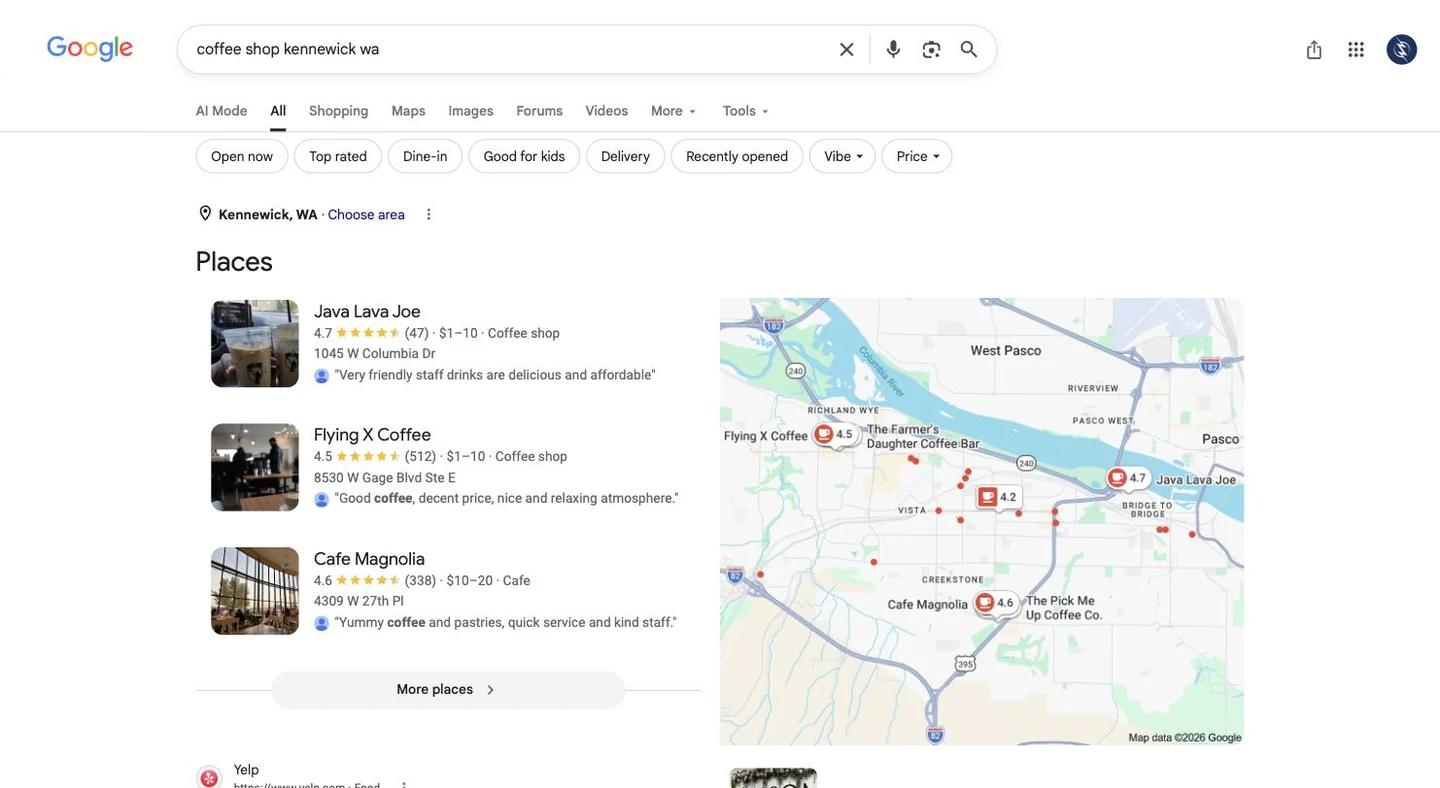
The consequence for a business in Walla Walla is genuinely good news. Forty thousand people, a modest number of real competitors per category, and a pack radius wide enough that one well-run listing can cover most of the town. The same business in the Tri-Cities is fighting a harder version of the same fight, because Kennewick, Richland and Pasco are three centers of gravity rather than one, and a listing in one of them does not cover the other two.
None of this is fixable with optimization. It is fixable with a second location, and that is an expensive answer nobody likes hearing. We say it anyway.
Grid rank tracking, because one search tells you nothing
If you check your ranking by searching from your own phone at your own counter, you are measuring the best result you will ever see. It is not a lie exactly – it is just the one point on the map where you were always going to win.
Grid rank tracking fixes this by running the same search from many simulated points across your area and drawing them as a map of numbers. A seven by seven grid at one mile spacing covers a small city; wider spacing covers a service area, and tighter spacing tells you something about a dense downtown block by block. What comes back is a shape rather than a rank, and the shape is the useful part.
A healthy grid is a green blob centered on your pin that fades with distance. An unhealthy one is green at the pin and red everywhere else, which means you are relevant but not prominent, and prominence is the thing reviews and links and content build. A grid that is patchy in a way that ignores distance usually means a category mismatch on some of those queries.
Track it monthly, on the two or three services that actually pay your bills, and keep the images. The before-and-after grid is the only local ranking evidence that is hard to fake, which is exactly why so few agencies show one.
Review velocity, and the words inside them
Review count is a vanity number. Velocity and vocabulary do the work.
Velocity is the arrival rate. Sixty reviews with four from this month reads better to a customer and behaves better in the pack than two hundred reviews that stopped in 2023, and a business that gets one review a week forever is in better shape than one that got forty in a fortnight and nothing since. Steady beats spiky – and spiky also happens to look like exactly what it usually is.
Vocabulary is the part almost nobody works on. Review text is one of the inputs to relevance, so a review that says “they replaced our water heater the same day” is doing something for water heater searches that a review saying “great service, highly recommend” is not doing at all. You cannot script this and you should not try. You can ask a better question, though; instead of “would you leave us a review”, ask “would you mind mentioning which job we did for you”. That is the whole technique.
Two rules to stay out of trouble. Do not gate reviews by screening happy customers toward Google and unhappy ones toward a private form, which is against Google’s policy and is detectable. Do not buy them, ever, because the removal of purchased reviews is public and your customers can read the wreckage.
Service area businesses and the rules that catch them
A service area business is one that goes to the customer rather than the other way around, and Google treats it differently in ways that cost people their listings.
If customers do not come to your address, the address must be hidden. Leaving your home address visible on a plumbing listing is a policy violation and it is also how that address ends up on forty directories. Hiding it is not a ranking penalty in itself – it does change what Google measures distance from, and this is where service area businesses get their hardest lesson. Google still ranks you from a point, and that point is your hidden address, not the middle of the service area you drew. Drawing a service area covering four counties does not make you rank in four counties. It never has.
The two things that reliably end a service area listing are a virtual office and a shared address. Renting a mailbox at a pack-and-ship store to get a pin in a better town is the local SEO fraud we run into more than any other, and it is also the easiest for a competitor to report. If you want to rank in Kennewick, the honest routes are a real staffed location there or accepting a worse ranking there. There is no third route that survives a review; there never was one.
Your competitor's spam is a ranking factor
Look at the pack for your main service and count how many of the business names contain the service and the city. Some of those are the real registered names. Most are not.
Keyword stuffing in the business name field is against Google’s guidelines and it works, which is an annoying pair of facts to hold at once. The name field is a strong relevance signal, so “Walla Walla Emergency Plumbing 24/7” outranks “Peterson & Sons” on the search that matters – at least until somebody reports it. The same category holds fake listings at addresses that are apartments, lead generation listings run by companies that sell your calls to whoever is buying, and businesses claiming service areas they have never driven to.
You have two options and only one of them is any good. You can copy them, which works until the enforcement pass that eventually comes, and then you lose a listing that your whole business depends on. Or you can report them, which is free, slow, and permanently effective when it lands.
How to actually get map spam removed
Reporting works far more often than people assume, and it fails when it is done casually. Do it like paperwork.
The simple route is the “suggest an edit” control on the offending listing, where you can propose the correct business name as it appears on their own storefront, their own website and their own invoices. For anything larger there is the Business Redressal Complaint Form, which is the channel Google actually built for businesses reporting competitors, and it accepts a spreadsheet of listings with evidence attached to each one.
Evidence is the whole game. A screenshot of the listing, a screenshot of their website showing the real name, a photo of the storefront, a link to their state business registration. One well-documented complaint beats forty complaints that say “this listing is spam”. Expect nothing for weeks, expect no reply, and check the pack again in a month – sometimes the listing is corrected quietly and nobody tells you it happened.
This is unglamorous work and it is often the highest-return hour available in a spammy category, because removing one stuffed name from the pack promotes everybody below it, including you.
Suspensions, and how not to trigger one
Profile suspensions are the reason we change things deliberately rather than all at once. A suspended listing disappears from Maps entirely, and reinstatement is a slow process run through a form with no phone number attached to it.
The reliable triggers are the ones you would expect and a few you would not. Changing the business name, address and category in the same afternoon looks like a hijacked listing. Adding a keyword to the name gets flagged. Editing a listing in a category Google treats as high risk, which includes locksmiths, garage door work, addiction services and a few others, invites a review at almost any excuse. So does a second listing at an address where another business already sits.
Change one significant field at a time, leave it a week, and keep your verification evidence somewhere you can find it: photographs of signage, a utility bill at the address, the registration paperwork. Nobody keeps those until after the first suspension. Keep them now.
Why there is no map-pack-only package
There is no map-pack-only package here, and we have thought about selling one. The profile work alone tops out fast, and a business paying monthly for profile maintenance and nothing else is paying for a job that finished in week three.
What SEO for Google Maps cannot fix
The map pack is three slots. There is no version of this work that puts you in a slot you are geographically wrong for, and anybody promising otherwise is selling you a screenshot taken in your own parking lot.
It also cannot fix a business with a two-star average and a real reason for it, because at that point the ranking is not the problem and improving it would only show more people the problem. It cannot fix a category you are not actually in. And it cannot make the map pack matter for searches that do not show one, which is most informational searches and a surprising number of commercial ones; those go to the blue links underneath, and the blue links run on your website rather than your profile.
That is the honest boundary of this page. Half of local search is the website half, and the local SEO page covers that side properly.
How long it takes
Category and profile corrections are the fastest thing in SEO. Movement inside two to four weeks is normal when the primary category was wrong, and it is the most satisfying result in this discipline and the least representative one.
Review velocity and citation clean-up show up across one to three months. Prominence, which is the factor that decides the searches where distance does not separate anybody, moves on the same clock as the rest of SEO: three to six months to see it, nine to twelve to be paid back. Spam reports resolve on Google’s own schedule, which is to say unpredictably – somewhere between two weeks and never.
Common questions
How do I rank higher on Google Maps?
Get the primary category right first, then build review velocity with reviews naming the service, then work on prominence through your website, links and mentions. Distance you cannot change, so the goal is winning the area your customers live in rather than every point on the map.
How long does Google Maps SEO take to work?
Category and profile fixes can move within two to four weeks. Everything driven by prominence takes three to six months to become visible and nine to twelve to pay for itself, which is the same clock as the rest of SEO.
Does posting on my Google Business Profile help rankings?
Posts have little direct ranking effect that anyone can demonstrate cleanly. They do take up space on your listing, they do get clicked, and profiles that are maintained monthly tend to outperform identical profiles that are not, so we keep doing them.
Why do I rank first on my phone but nowhere else?
Because you are standing at your own business and your customers are not. A single search from your own location is the one measurement guaranteed to flatter you, which is why grid tracking exists.
Can I report a competitor for keyword stuffing their name?
Yes, through suggest an edit on their listing or through the Business Redressal Complaint Form for anything bigger. Attach evidence showing their real name on their storefront, their website and their registration, because complaints without evidence go nowhere.
Do I need a physical address to rank in Google Maps?
You need a real address Google can verify, though customers do not have to visit it. Service area businesses hide the address and still rank, and a mailbox at a shipping store is the fastest way to lose the listing permanently.
How many reviews do I need to get into the map pack?
More than the businesses currently holding the three slots, arriving steadily. Look at what the top three have and what their last two months look like, because the gap you have to close is a rate, not a total.
Is Google Maps SEO different from local SEO?
Google Maps SEO is the map pack half of local SEO. Local SEO includes the website half underneath, which runs on pages and content and speed, and most businesses need both and get sold one.